Dars Material
A matter that makes these blessed days special is the fact that Allah swears by them. In Surah al-Fajr, Allah states:
وَالۡفَجۡرِ ۙوَلَيَالٍ عَشۡرٍ
“By the Dawn, And the Ten Nights” (Surah al-Fajr, Ch.89: V.2-3)
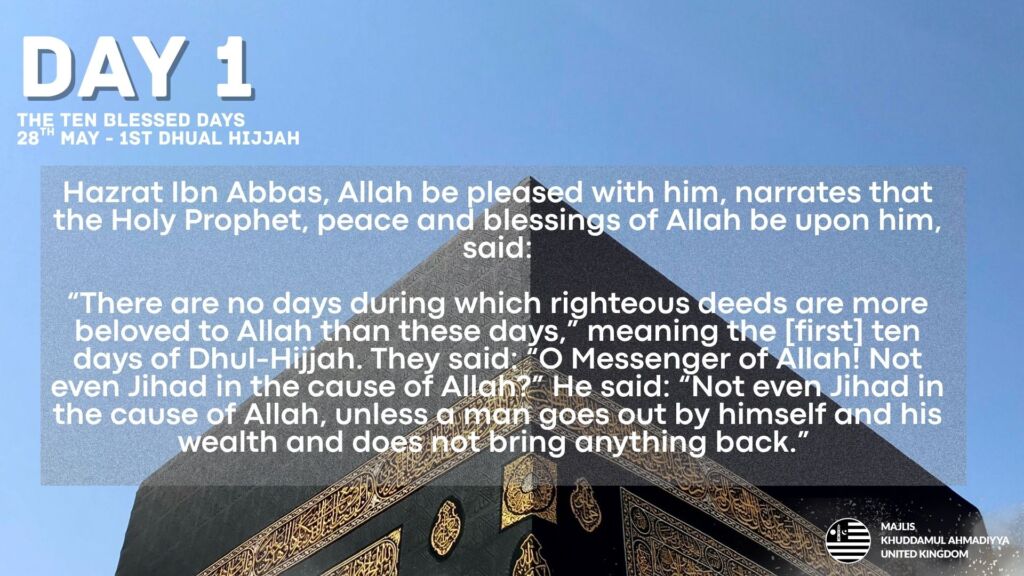
In his commentary, Hazrat Musleh-e-Maudra states that Ibn Abbas, along with Abdullah bin Zubair, Mujahid, and numerous scholars from among the salaf, asserts that the “Ten Nights” mentioned refer to the nights of Dhul-Hijjah preceding Eid. This interpretation finds support among later scholars as well. Ibn Abbas, as narrated in Tirmidhi, emphasises the significance of these days, stating that the righteous deeds performed during them are particularly beloved to Allah. While any day can witness acts of goodness earning divine favour, these 10 days hold special importance, marked by heightened value for righteous deeds in the eyes of Allah. Among them, the 10th of Dhul-Hijjah stands as a pinnacle, with no day more cherished by Allah for the performance of good deeds. When asked if Jihad in the path of Allah is superior, the Messenger of God clarified that Jihad does not surpass the actions of these days. The only exception lies in the case of a person sacrificing their life and wealth in the path of God, in which case their sacrifice equals the righteous deeds of their youth. Otherwise, no other deed can match the merit of deeds performed during these ten days. (Tafsir-e-Kabir, Vol. 12, pp. 161-162)
This has also been alluded to in various commentaries, such as Tafsir al-Jalalayn, Tanwir al-Miqbas min Tafsir Ibn Abbas, Tafsir al-Tustari, under this verse.